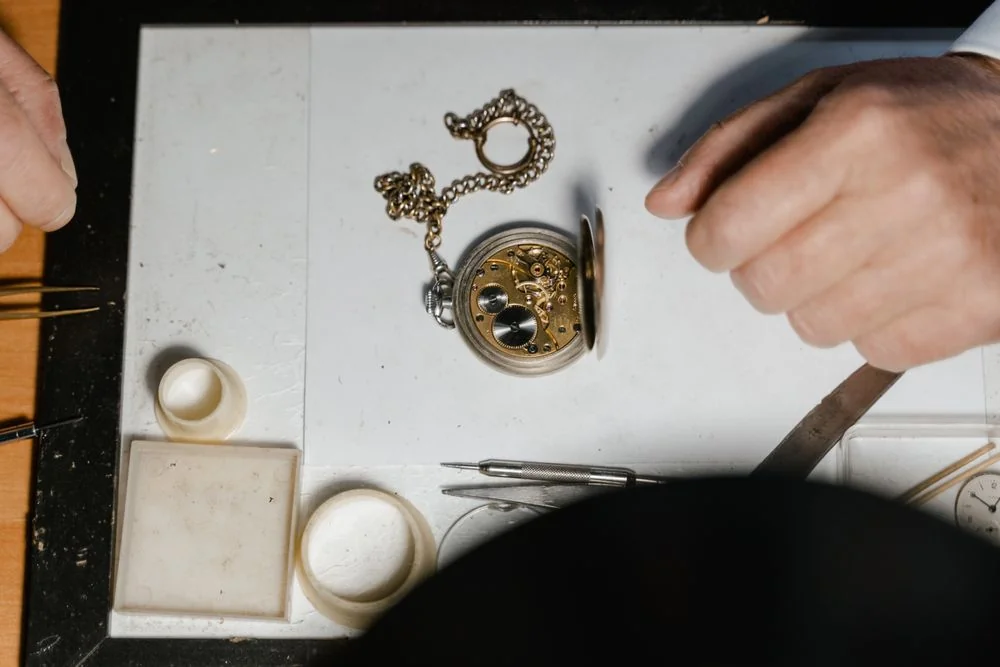
Detailed view of watchmaking tools and watch parts on a workbench in Québec City
Canadian Horological Workshop · Québec City

The Art of the Watch Mechanism

is an independent Canadian specialist workshop dedicated to the study, preservation, and intricate architecture of mechanical watch movements. Situated at 255 Ave Saint-Sacrement in Québec City, we approach horology through precision engineering, quiet patience, and an enduring respect for mechanical timekeeping.

The Philosophy of Mechanical Motion

At Purelqa Vionessa, watchmaking begins with an appreciation for restraint. In a world increasingly defined by ephemeral digital screens, the mechanical watch stands as an enduring monument to permanence. Every oscillating balance wheel, meticulously slotted screw, and tooth-cut pinion represents an unbroken lineage of horological science.

Our philosophy centers on deliberate, unhurried observation. Before an instrument is touched, its geometry and balance must be deeply understood. We view the architecture of a movement as an interconnected mechanical ecosystem where tolerances are measured in fractions of a millimeter and every single friction point alters the cadence of time.

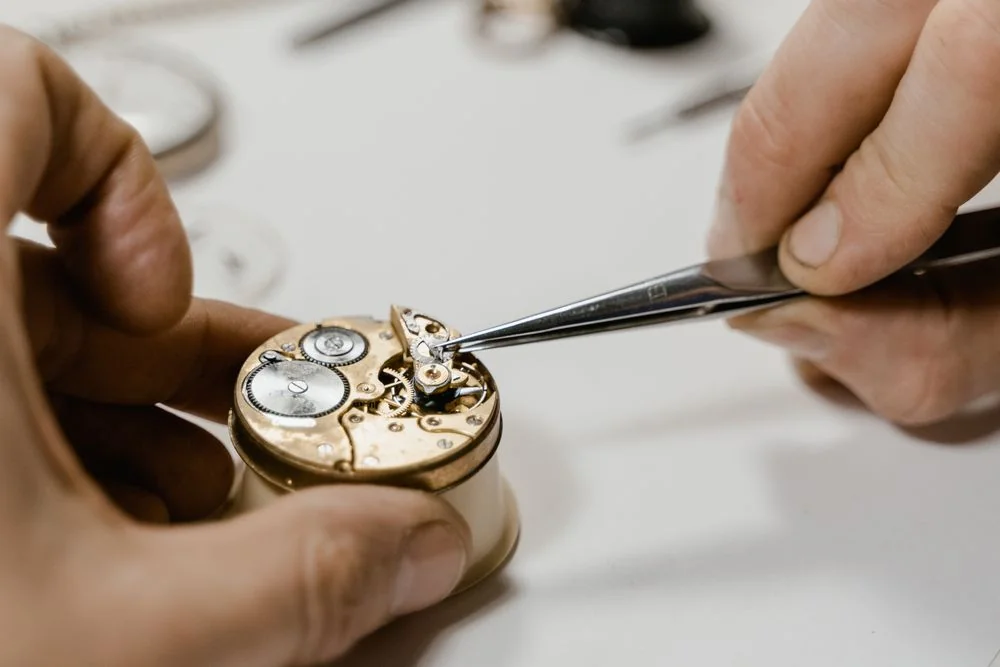
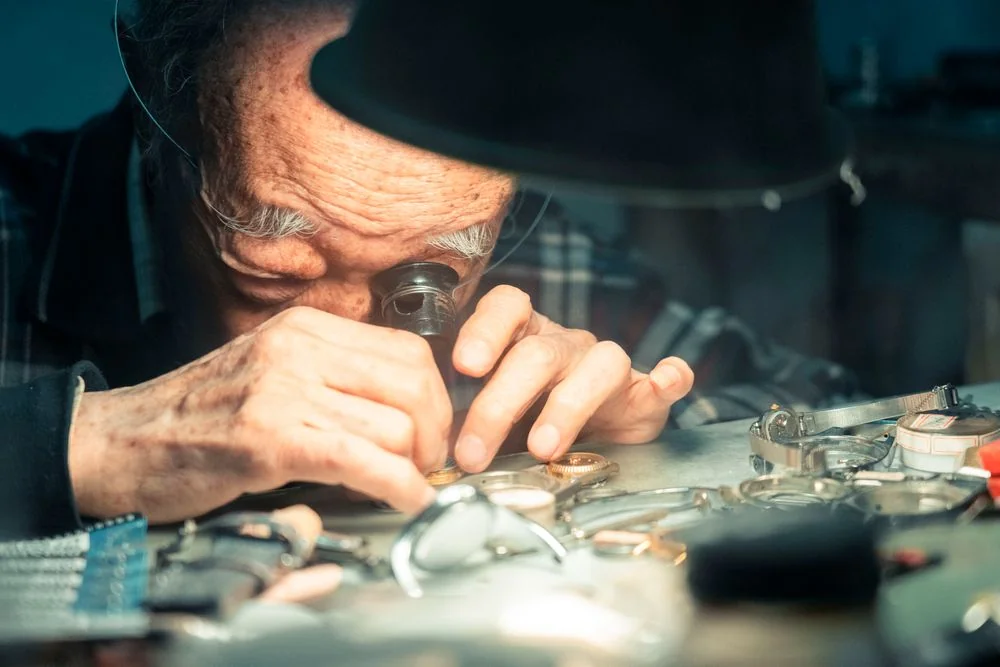
Skilled watchmaker hands manipulating fine movement components with precision tweezers
Atelier Practice: Component alignment and steady-hand manipulation under high magnification at our Québec workbench.

Horological Traditions in Modern Canada

Canadian horological craft embraces both historical European traditions and clean, contemporary northern discipline. We draw directly from classical Swiss, French, and British principles of movement architecture, translating those foundational tenets into an environment characterized by transparency, methodical documentation, and technical exactitude.
Foundational Standards

Principles of Craftsmanship

A structured overview of the tenets governing every mechanical examination, component analysis, and architectural evaluation conducted within our workshop.

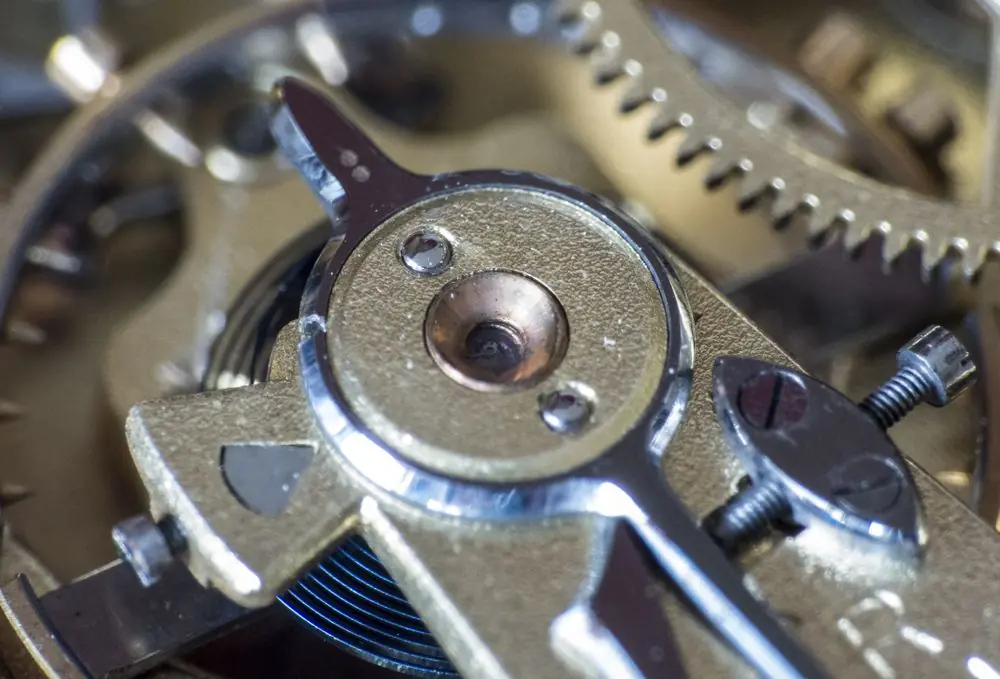
Close-up macro of metallic gears showing wheel teeth and pinions
01 / Metallurgy

Materials Appreciation

Respect for raw materials dictates every mechanical outcome. From cupro-beryllium balance wheels and tempered blued steel springs to polished brass train wheels and German silver mainplates, each alloy possesses specific thermal coefficients, wear characteristics, and resonance.

Mechanical movement balance assembly and escapement components
02 / Geometry

Component Architecture

Every movement relies on a harmonious sequence of energy transfer. Our focus centers on the spatial geometry between the mainspring barrel, gear train wheels, pallet fork, and oscillating balance, ensuring unhindered kinetic progression.

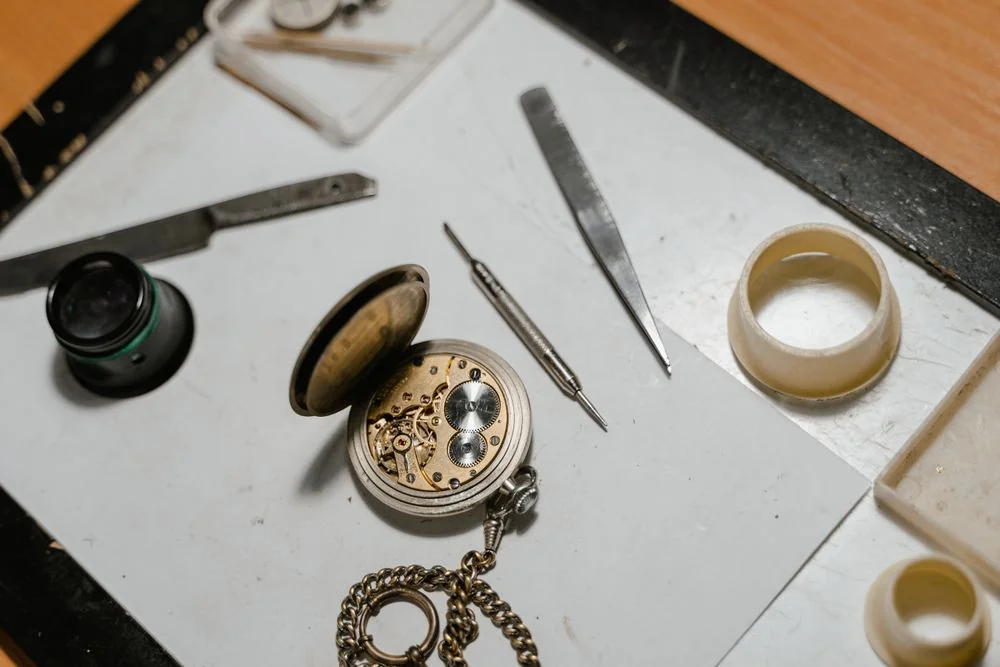
Fine watchmaker screwdrivers, tweezers and inspection tools on wood bench
03 / Tooling

Hand Instrumentation

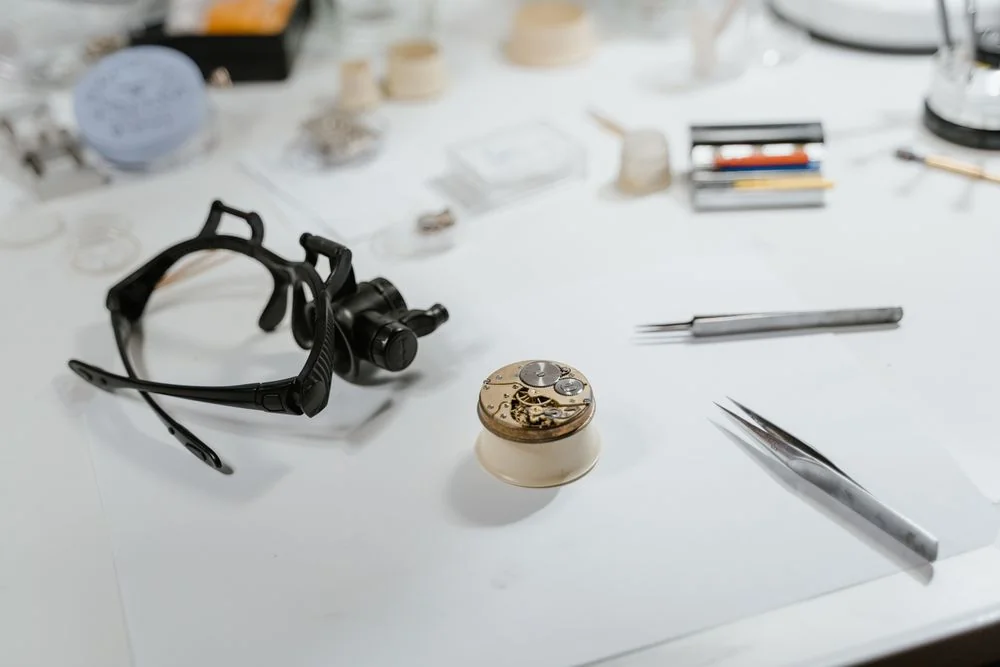
True precision requires hand-dressed screwdrivers, non-magnetic antimagnetic brass tweezers, optical loupes, and precision staking sets. The instrument must become a natural extension of the watchmaker's tactile perception.

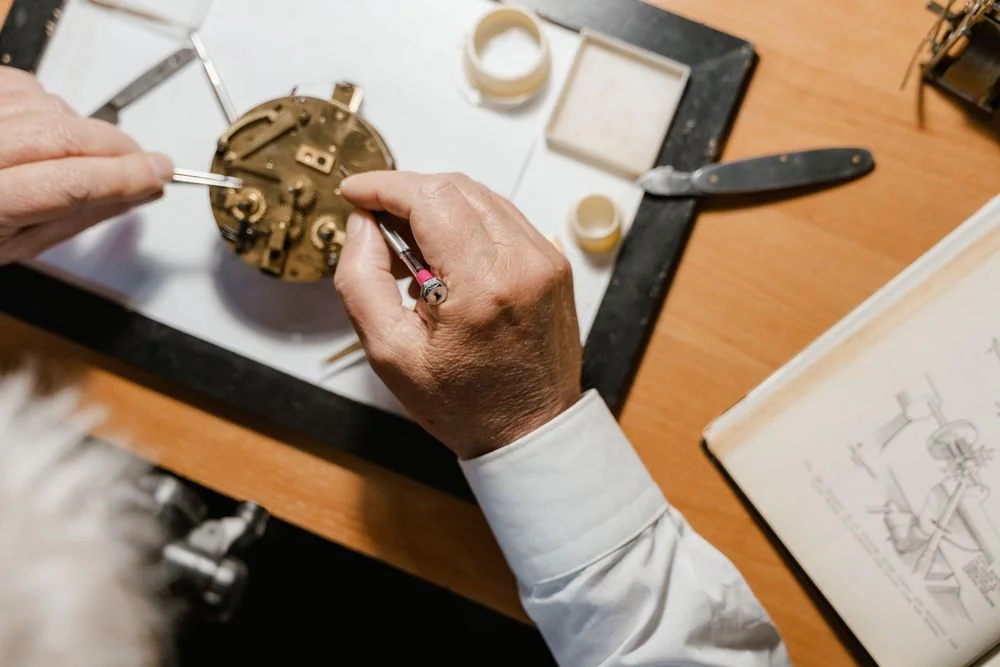
Detailed examination of vintage balance assembly under bench lighting
04 / Discipline

Attention to Tolerances

In mechanical horology, a variance of three microns can shift the entire isochronism of a balance spring. We practice exacting vigilance regarding endshake, sideshake, pivot concentricity, and microscopic surface cleanliness.

Workshop Atmosphere

The Physical Environment & Bench Practices

The Purelqa Vionessa atelier is organized around isolation from environmental disturbances. Dust filtration, constant temperature governance, and glare-free illumination form the baseline requirements for reliable micro-mechanical study.

01

Ergonomic Solid Beech Benches

High-stance work surfaces crafted to support the watchmaker's forearms, stabilizing pulse and muscle vibration during intricate pivot positioning.

02

Particulate Control & Component Trays

Covered glass bell jars and partitioned antistatic trays protect disassembled movement layers from ambient atmospheric particles.

03

Optical Magnification Protocol

Tiered binocular inspection stereomicroscopes and aplanatic hand loupes permit exhaustive analysis of jewel sinks, pivots, and wheel arbor teeth.